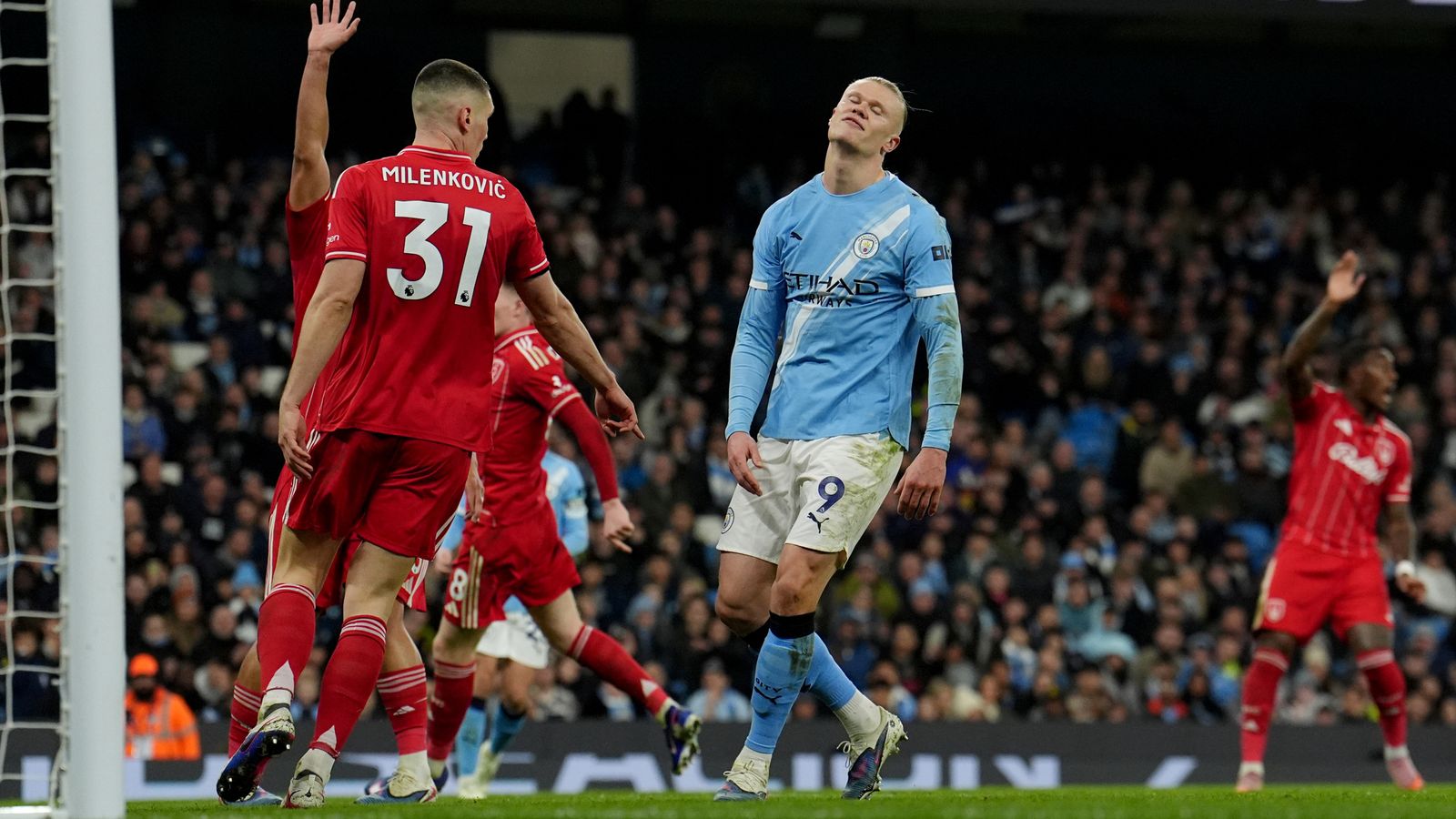
Man City vs Forest Stats: How the 2-2 Draw Defied Expectations
The beautiful game of football often delivers results that challenge conventional wisdom, and few matches encapsulate this better than the recent 2-2 draw between Manchester City and Nottingham Forest. On paper, and indeed by nearly every statistical metric, this was a contest Manchester City should have comfortably won. Yet, Forest, against all odds and the overwhelming
man city forest stats, snatched a crucial point, leaving fans and pundits alike marveling at the unpredictability of the Premier League. This article delves deep into the numbers, exploring how Forest managed to defy the statistical dominance of the reigning champions and what these captivating insights mean for both clubs.
A Closer Look at the Dominant Man City Forest Stats
From the moment the whistle blew, Manchester City asserted their authority, monopolizing possession and launching a relentless barrage on the Forest goal. The raw
man city forest stats paint a picture of utter dominance for the Sky Blues:
*
Possession: Manchester City controlled an astounding 70% of the ball, leaving Nottingham Forest with just 30%. This stark disparity typically signifies a one-sided affair, with the dominant team dictating the tempo and suffocating the opposition.
*
Shots: City registered a staggering 21 shots throughout the match, more than double Forest's tally of 9.
*
Shots On Target: While City managed 6 shots on target, Forest were not far behind with 4, indicating a higher conversion rate for the visitors given their fewer attempts.
*
Shots Off Target: A remarkable 15 shots missed the mark for City, highlighting a degree of profligacy or excellent defensive pressure from Forest.
*
Corners: City earned 6 corners, compared to Forest’s single corner, further emphasizing the territorial advantage City held in attacking areas.
*
Fouls: City committed 10 fouls, while Forest committed 6, suggesting a slightly more aggressive approach from the champions, perhaps out of frustration as the game wore on.
*
Cards: A clean sheet for City in terms of discipline, while Forest picked up 4 cards, reflecting their tenacious, sometimes desperate, defensive effort.
These figures illustrate a clear narrative: Manchester City played the game primarily in Forest's half, creating numerous chances and dictating play. The fact that this overwhelming statistical superiority did not translate into a victory is the very essence of why this draw was so surprising and compelling.
Nottingham Forest's Clinical Edge and Defensive Resilience
While the
man city forest stats heavily favored the home side, Nottingham Forest's performance was a masterclass in resilience, tactical discipline, and clinical finishing. Despite having only 30% possession, Forest utilized their limited opportunities with remarkable efficiency. Their ability to register 4 shots on target from just 9 total attempts demonstrates a sharp focus on making every foray into City's territory count.
Forest's goals came from timely interventions by Morgan Gibbs-White in the 56th minute and Elliot Anderson in the 76th minute, both proving to be pivotal moments that swung momentum and ultimately secured the draw. These goals showcased not just individual brilliance but also a collective ability to exploit momentary lapses in City's otherwise watertight defense. The team's defensive structure, often a deep block, absorbed immense pressure, forcing City into wide areas and difficult shooting positions. The 4 cards they received also hint at their willingness to break up play and commit to challenges, embodying a fighting spirit necessary to grind out a result against a top-tier opponent. This tactical execution, combined with an undeniable fighting spirit, allowed them to turn the tide against the reigning champions.
The Battle of Expected Goals (xG) and Real-World Outcomes
One of the most telling metrics in the
man city forest stats for this encounter is Expected Goals (xG). Manchester City recorded an xG of 2.44, while Nottingham Forest's xG stood at a mere 0.98. For those unfamiliar, xG quantifies the quality of goalscoring chances a team creates, based on factors like shot location, body part used, and assist type.
A typical interpretation of these xG figures would suggest that Manchester City should have scored between 2 and 3 goals, while Nottingham Forest would be expected to score less than 1 goal. The actual 2-2 scoreline, therefore, represents a significant overperformance by Nottingham Forest relative to their xG and an underperformance by Manchester City. This deviation from xG is precisely what makes the result so extraordinary. Forest's clinical finishing, converting low-probability chances, coupled with perhaps some fortuitous bounces or moments of goalkeeping brilliance (or City's lack thereof), allowed them to defy the statistical likelihood. Conversely, City's failure to convert their higher-quality chances into more goals ultimately cost them the win. For a deeper dive into how dominant statistics don't always guarantee a win, explore
Manchester City vs Nottingham Forest: Dominant Stats, Elusive Win.
Tactical Implications and Ramifications for Both Clubs
The 2-2 draw carries significant tactical and league-wide ramifications. For Manchester City, despite their overwhelming
man city forest stats, the result raises questions about their cutting edge in front of goal and potential defensive vulnerabilities. While goals from Antoine Semenyo and Rodri kept them in the game, failing to convert 2.44 xG into more than two actual goals suggests that even a team of City's caliber can struggle with finishing under pressure. This could be a point of concern for Pep Guardiola as they navigate a tight title race. Teams looking to emulate Forest's success might adopt similar deep-lying defensive strategies and aim to be ultra-clinical on the break.
For Nottingham Forest, this point is invaluable. Battling at the other end of the table, every point matters. Earning a draw at the Etihad Stadium, a fortress for City, is a massive psychological boost and provides concrete evidence that they can compete with the league's elite. Their ability to twice come from behind, with goals from Gibbs-White and Anderson, showcases immense character and resilience, qualities vital for avoiding relegation. This result will give them confidence for the remainder of their campaign, demonstrating their potential to upset expectations. The impact of this comeback is further analyzed in
Nottingham Forest's 2-2 Comeback at Man City: Key Match Stats & Impact.
Key Player Performances and Managerial Takeaways
Beyond the collective
man city forest stats, individual performances played a crucial role. For Manchester City, Rodri continued to be a midfield anchor, also bagging a goal, while Antoine Semenyo provided the other goal, demonstrating their attacking prowess. However, the missed opportunities from City's forwards, despite their high shot count, will be a point of focus for analysis. The starting lineup featured strong names like Ruben Dias and Bernardo Silva, but even their collective talent couldn't prevent the draw.
For Nottingham Forest, the contributions of Morgan Gibbs-White and Elliot Anderson, both getting on the scoresheet, were instrumental. Their ability to deliver in high-pressure moments highlighted their importance to Forest's attacking threat. Goalkeeper Matz Sels, despite not being explicitly highlighted in the stats, would have undoubtedly played a crucial role in keeping the score level against City’s barrage of shots. Managers analyzing these kinds of results often look beyond the surface-level stats. They might delve into specific sequences of play, individual player heatmaps, or defensive positioning errors to understand *how* the statistical anomalies occurred, rather than just *that* they occurred. This granular analysis helps in refining tactics and preparing for future encounters against diverse opponents.
In conclusion, the 2-2 draw between Manchester City and Nottingham Forest was a captivating encounter that beautifully illustrated the unpredictable nature of football. The overwhelming
man city forest stats suggested a comfortable City victory, yet Forest's resilience, tactical discipline, and clinical finishing allowed them to snatch a memorable point. This result not only has significant implications for both clubs' league campaigns but also serves as a potent reminder that in football, statistics tell a story, but they don't always dictate the final chapter.